

The Serengeti’s Spare-Parts Superstar: 6 Surprising Facts About the Wildebeest 🐾
The Serengeti’s Spare-Parts Superstar: 6 Surprising Facts About the Wildebeest 🐾
When people think of the Great Migration, they often see the wildebeest as the “supporting cast” to the big cats or the tragic hero of the Mara River. But at Vaa Africa, we know the truth: the wildebeest (or “Gnu”) is one of the most fascinating and resilient creatures on the planet.
As we gear up for the Calving Season, here are six fun facts that prove these “spare-parts” animals are the true kings of the Serengeti plains.
1. Built From “Spare Parts”
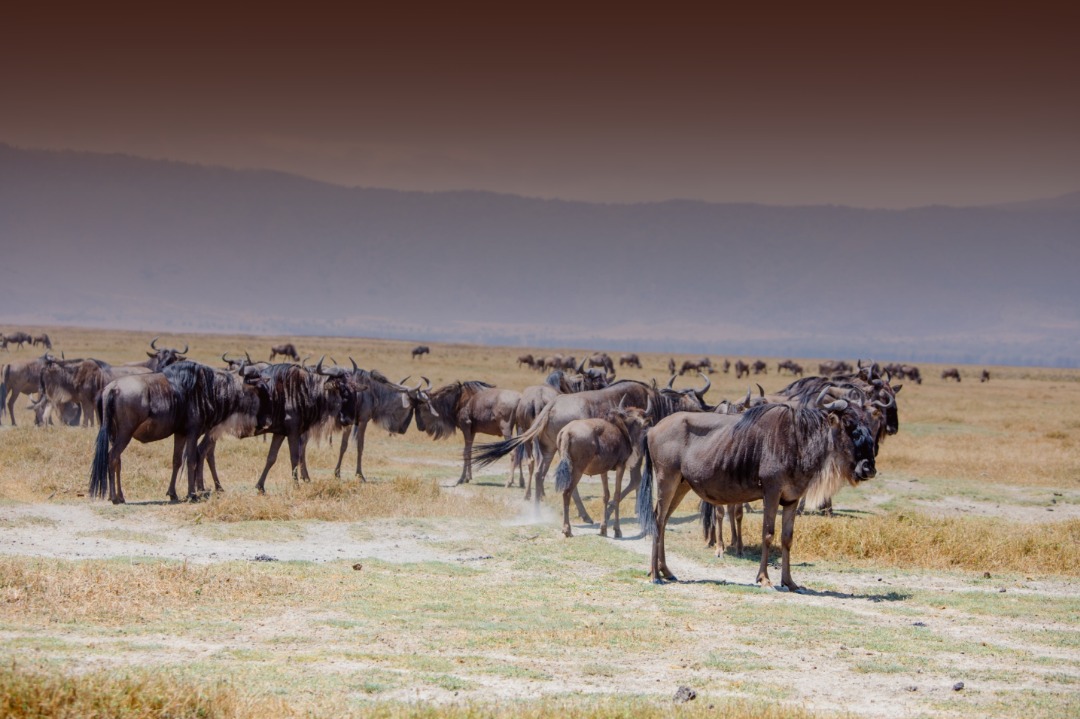
There is an old African folktale that says the wildebeest was created from the leftovers of other animals. Look closely and you’ll see it: the head of an ox, the mane of a horse, and the slender legs of an antelope. It might look like a design by committee, but that build allows them to hit speeds of 80 km/h (50 mph)!
2. The 7-Minute Sprint
In the wild, there is no time for a slow start. During the Calving Season (January–March), survival is a race against time. A wildebeest calf can usually stand within 7 minutes of birth. Within two days, that same calf can outrun a pride of lions. Talk about hitting the ground running!
3. A Biological GPS for Rain
Wildebeests are the ultimate storm-chasers. They can detect rainfall from over 50 kilometers (30 miles) away. Scientists believe they can actually “hear” the low-frequency rumble of distant thunder or smell the moisture in the air. This internal compass is what drives the 800-kilometer loop of the Great Migration.
4. “Swarm Intelligence” (No Bosses Here!)
Unlike many herds, wildebeests don’t have a single leader. They operate on what we call swarm intelligence. They move as a collective consciousness. When you see thousands of them hesitating at a riverbank, they aren’t waiting for a king to give an order; they are waiting for the “collective” urge to cross. Once one jumps, the rest follow in a chaotic, spectacular domino effect.
5. The Serengeti’s Natural Lawnmowers.
The migration isn’t just a move; it’s a massive landscaping project. By grazing down the long grasses, wildebeests prevent massive wildfires and stimulate new growth. Their journey also distributes thousands of tons of natural fertilizer (dung) across the plains, keeping the Serengeti ecosystem healthy and vibrant.
6. Why the Name “Gnu”?
The word “Gnu”
(pronounced new) isn’t just a funny name—it’s onomatopoeia! It comes from the Khoikhoi language, mimicking the distinct “ge-nu” snorting sound they make to communicate or warn the herd of nearby predators.
See the Magic for Yourself
From the frantic energy of the river crossings to the tender (but fast!) moments of the calving season, the wildebeest is the heartbeat of Tanzania.
At Vaa Africa, we know exactly where these herds will be and when. Whether you want to witness the “7-minute milestone” in February or the river drama in August, we are here to guide you.
✨ Let us know your dream, and we’ll tell you when to fly.
📩 Book your safari: info@vaaafrica.com


Comments are closed